
My first truly “coffee-intensive” trip to Jeju Island wasn’t driven by a deep love for coffee itself; rather, it began when I was planning my itinerary and started seriously looking into the Cafe Pass offered by JejuPass.
At first, I thought it was just a “coffee discount card.” However, once I understood the rules, I realized it was actually a tool that turned “coffee drinking” into an integral part of the travel rhythm. Consequently, my entire Jeju experience ended up revolving around these cafes.
How the Cafe Pass works: One drink every 3 hours—a way to pace your trip
A core feature of the JejuPass Cafe Pass rules is this: within the validity period, you can redeem one standard drink every three hours.
It sounds simple, but in practice, you discover that this rule isn’t a restriction—it actually helps structure the pace of your stops.
When road-tripping around Jeju, you naturally move between the coastline, mountain roads, and small towns; cafes serve as perfect, natural “pit stops.”
That’s exactly how my first day went: I drove along the coast, stopping whenever I spotted a nice cafe. I didn’t have to agonize over whether to make a purchase, because the Cafe Pass had already “standardized” the process.
I’d order a standard Americano or latte, sit back to gaze at the ocean and rest, then hit the road again.
The travel rhythm shifted from “rushing to get somewhere” to a cycle of “moving and pausing.”
200 trendy cafes: Making choices actually becomes easier
Many people feel overwhelmed by the sheer number of partner cafes (200 of them) at first, but that sense of complexity fades when you actually use the pass.
This is because the cafes are mostly clustered in a few distinct areas: coastal spots, cafes with forest views, and unique, locally designed shops.
In my own experience, I gravitated toward two specific types:
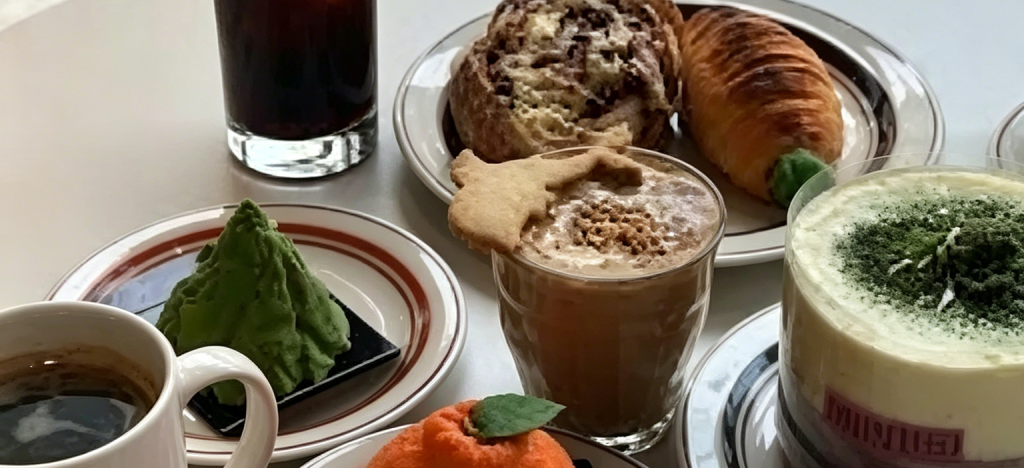
One type was the seaside cafe—places where you could see the ocean while driving and walk right in after parking. The other type was cafes along mountain roads; these offered a quieter atmosphere, perfect for a mid-drive break.
This is where the true value of the Cafe Pass becomes clear: you aren’t just “choosing a coffee,” you are “choosing a setting for your break.”
Choosing the Right Pass: “Per-Visit” vs. “Unlimited”
The question I get asked most often about the JejuPass is: Which Cafe Pass should I actually choose?
My conclusion is straightforward:
For a short, two-day trip, the “per-visit” pass is better; your itinerary is packed, but the number of stops is limited. For a more in-depth trip of four days or longer, the “unlimited” pass is the better choice, as you naturally settle into a rhythm of visiting cafes every day.
I used the unlimited pass for my four-day trip, stopping for coffee two or three times a day.
On the first day, I watched the sunset at a seaside cafe; on the second, I took breaks at cafes along the mountain roads; and on the third, I basically stopped whenever I saw the ocean.
This shift in usage patterns didn’t mean I was consuming more coffee overall; rather, it made my stops feel more natural and well-paced.
Heads-Up: Rules You Need to Know in Advance
There are a few easily overlooked restrictions when using the JejuPass Cafe Pass:
First, redemptions are generally limited to basic drinks—like Americanos or lattes—while specialty drinks are usually excluded. Second, many shops have limited operating hours; some popular “Instagrammable” cafes might close early in the afternoon or sell out of items. Finally, the Cafe Pass is linked to a specific account and cannot be transferred or shared among multiple people.
These rules might feel a bit restrictive at first, but in practice, they serve to ensure system stability rather than hinder the user experience.
When I first visited a seaside cafe, I encountered a situation where I couldn’t redeem a specialty drink and had to settle for a basic one. However, this actually gave me a clearer understanding of the pass’s purpose: it’s not about drinking “more expensive coffee,” but about having the freedom to stop whenever you feel like it.
Real-World Comparison: Ordering à La Carte vs. Using the Cafe Pass

I later did a quick calculation of my coffee spending during the Jeju trip.
Based on à la carte prices, a cup of coffee at a cafe with an ocean view averages between 5,000 and 7,000 KRW. Over a four-day trip, drinking two cups a day would cost at least 40,000 to 50,000 KRW.
Using the JejuPass Cafe Pass lowered my overall costs while adding the freedom to stop for coffee whenever I saw a place that caught my eye. More importantly, it wasn’t about “saving money,” but rather reducing the stress of decision-making.
You didn’t have to weigh whether a cup of coffee was “worth it” every time; it had simply become part of the travel routine.
A Coastal Coffee Trail: Cafés Become the Journey Itself
The most interesting aspect of this Jeju trip was that I hardly planned my café visits in advance; instead, I simply drove along the coastline and stopped wherever a place caught my eye.
For instance, on the stretch between Seogwipo and Aewol, a seaside café would appear every so often. Park, step inside, sit for a while, then move on—the cycle repeated itself naturally.
Thanks to the JejuPass Cafe Pass, these stops were no longer “extra expenses,” but rather integral “waypoints” in the itinerary.
In a sense, the cafés became part of the route itself, rather than mere add-ons separate from the main destinations.
What the Cafe Pass Truly Changed Wasn’t the Coffee, but the Pace of Travel
Looking back at the trip, the biggest shift wasn’t in the amount of coffee I consumed, but in how “natural” the entire journey felt.
I had a car for mobility and the Cafe Pass for making stops—and the JejuPass seamlessly linked the two.
Coffee ceased to be just a consumer transaction and became a rhythmic element of the journey.
Travel transformed from a mission to “visit many places” into a process of “moving leisurely through a single location.”